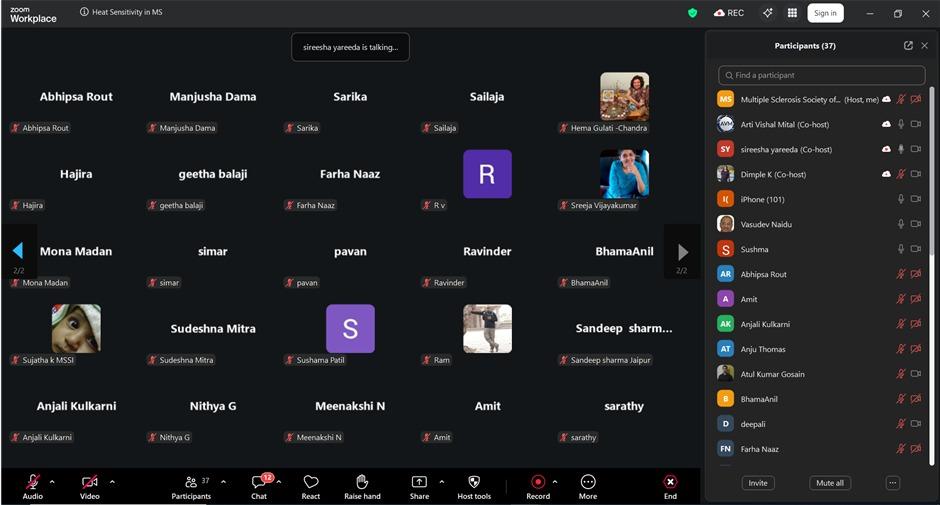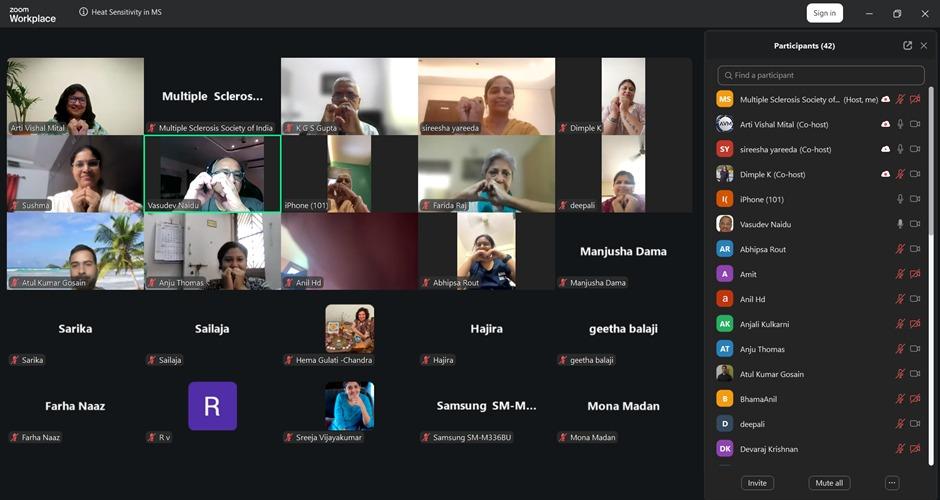
On the occasion of World MS Day month, the MSSI Hyderabad Chapter organised an informative and interactive webinar program on Sunday, 03 May 2026 at 11:30 AM via Zoom Workplace. The session brought together the MS community, including MS patients, caregivers, and medical professionals, to discuss critical aspects of managing Multiple Sclerosis.
The program was thoughtfully structured around two vital topics impacting the daily lives and quality of life of those living with MS: Heat Sensitivity and Bladder Control & Care.
The event witnessed enthusiastic participation with up to 42 participants logged in online, actively engaging with the speaker throughout the session.
Key Speakers & Leadership
The webinar featured a detailed clinical address by an expert guest speaker:
- Dr. Sireesha Yareeda: Additional Professor & Consultant Neurologist at the Nizam Institute of Medical Sciences (NIMS), Hyderabad.
- Mrs. Arti Vishal Mital: Hon. Secretary, MSSI Hyderabad Chapter, who helped coordinate the session and extended warm greetings to all attendees.
- Mrs. K. Dimple: Committee Member Youth Wing Representee, MSSI Hyderabad Chapter, who helped in conducting the Q&A Session.
Part 1: Heat Sensitivity in MS – Uhthoff’s Phenomenon
Dr. Sireesha Yareeda explained this widely experienced biological concept with great clarity, helping patients understand how temperature shifts affect their bodies.
What is it?
Uhthoff’s Phenomenon is a temporary worsening of existing MS symptoms caused by even a small rise in core body temperature, as little as 0.5°C. Heat slows down nerve conduction in areas where the myelin sheath has been previously damaged.
Important Note: This phenomenon does not cause new nerve damage or clinical relapses. It is entirely temporary and reversible.
Common Symptoms That Worsen with Heat:
- Blurred or double vision
- Muscle weakness or heaviness in limbs
- Increased fatigue and exhaustion
- Balance issues or dizziness
- Numbness, tingling, or burning sensations
- Brain fog and difficulty concentrating
Common Triggers: Hot weather, hot baths/showers, saunas, fever, strenuous exercise, hot drinks, emotional stress, or non-AC environments.
Recovery: Symptoms typically improve within 30 minutes to a few hours once the body actively cools down and the core temperature normalises.
If symptoms persist beyond 24 hrs better or in doubt to seek medical consultation.
Key Management Strategies:
- Cool Down Actively: Utilise air conditioning, fans, cooling vests, neck wraps, cold packs, or take cool showers.
- Plan Your Day: Schedule outdoor work, physical exercise, and critical tasks for the early mornings. Ensure rest during peak afternoon heat waves.
- Hydrate Well: Sip cool water consistently throughout the day, as dehydration naturally raises body temperature.
- Dress Smart: Wear light-colored, loose-fitting, cotton or highly breathable fabrics. Always use hats and sunglasses outdoors.
- Mindset Matters: Anxiety can exacerbate how symptoms feel. Reminding yourself that the flare-up is temporary and not a permanent relapse helps maintain calm, which directly reduces symptom intensity.
Why This Matters Now:
With increasing environmental heat waves, managing core body temperature is becoming as critical as standard disease-modifying medication for preserving personal energy, daily function, and overall quality of life.
Part 2: Bladder Control & Care in MS – A Detailed Guide
Bladder issues are common side effects of MS due to altered neural pathways, but they are highly manageable with the right lifestyle and medical approaches.
Why It Happens in MS:
MS lesions can disrupt the nerve signals transmitted between the brain and the bladder, leading to three primary types of clinical dysfunction:
- Overactive/Spastic Bladder: Characterised by sudden urgency, high frequency, and urge incontinence. The bladder muscle contracts suddenly even when it is not full.
- Underactive Bladder: Results in trouble starting urination, a weak stream, and incomplete emptying because the bladder muscle does not contract sufficiently.
- Mixed Symptoms: A complex combination of both overactive and underactive bladder issues.
Key Principles for Bladder Control:
A. Fluid Management
- Don’t Restrict Water: Arbitrarily cutting fluids makes urine highly concentrated, which irritates the bladder lining and exponentially raises UTI risks. Aim for 1.5 to 2 liters of water per day unless advised otherwise by a doctor.
- Time Your Fluids: Consume the majority of your liquids in the morning and afternoon. Taper your fluid intake 2 to 3 hours before bedtime to drastically reduce nighttime bathroom trips.
- Avoid Bladder Irritants: Reduce your intake of coffee, tea, cola, alcohol, citrus juices, and spicy foods, as they directly worsen urgency.
B. Bladder Training & Habits
- Timed Voiding: Do not wait for a sudden urge to strike. Proactively empty your bladder every 2 to 3 hours during waking hours.
- Double Voiding: After urinating, wait 30 seconds, consciously relax the pelvic floor, and try to urinate again. This helps empty the bladder fully. Posture Matters: For women, leaning forward slightly while sitting can improve emptying. For men, sitting down instead of standing can assist with complete bladder clearance.
- Pelvic Floor Exercises: Regular Kegel exercises strengthen the structural muscles supporting bladder control. A pelvic floor physiotherapist can provide specialised guidance.
C. Manage Constipation
A full, impacted bowel physically presses against the bladder wall, worsening urgency and frequency. Patients should address constipation daily by increasing dietary fiber, maintaining water intake, and engaging in gentle physical activity.
D. Watch for Infections
Urinary Tract Infections (UTIs) are significantly more common when incomplete bladder emptying occurs. UTIs can act as systemic stressors that trigger pseudo-relapses in MS patients.
- Warning Signs: Burning sensations during urination, cloudy or foul-smelling urine, fever, sudden spike in urgency, or an unexplained, abrupt worsening of baseline MS symptoms. Report these to your neurologist promptly.
E. When to Seek Help
Consult your treating neurologist or an independent urologist if you experience:
- Frequent, recurring UTIs
- Urinary leakage affecting daily life or mobility
- Chronic trouble emptying the bladder completely
- Getting up more than 2 times at night to urinate (Nocturia)
Tip: Maintain a standardized “Bladder Diary” for 3 consecutive days. Note your exact fluid intake, urination times, urgency episodes, and any leakage. This operational data helps your doctor tailor an exact clinical treatment plan. Advanced safe options like specific medications, clean intermittent catheterization (CIC), or Botox injections are readily available if lifestyle changes prove insufficient.
Session Highlights & Q&A
The webinar concluded with an engaging, interactive open Q&A session. Participants took advantage of the direct line to Dr. Sireesha Yareeda, asking specific questions about personal heat mitigation, tracking symptoms, and combining physical therapy with lifestyle management. All questions were addressed thoroughly, leaving the attendees with actionable clarity.
Key Takeaway: Both heat sensitivity and neurogenic bladder symptoms in MS are entirely manageable. Implementing small, consistent daily habits can prevent major lifestyle disruptions and empower patients to navigate MS together safely.